Landing Page Optimization: A Checklist for More Enquiries

Aqtelo teamDesign and engineering team
- Published
- Focus
- Germany, Switzerland
- Reading time
- 6 minutes
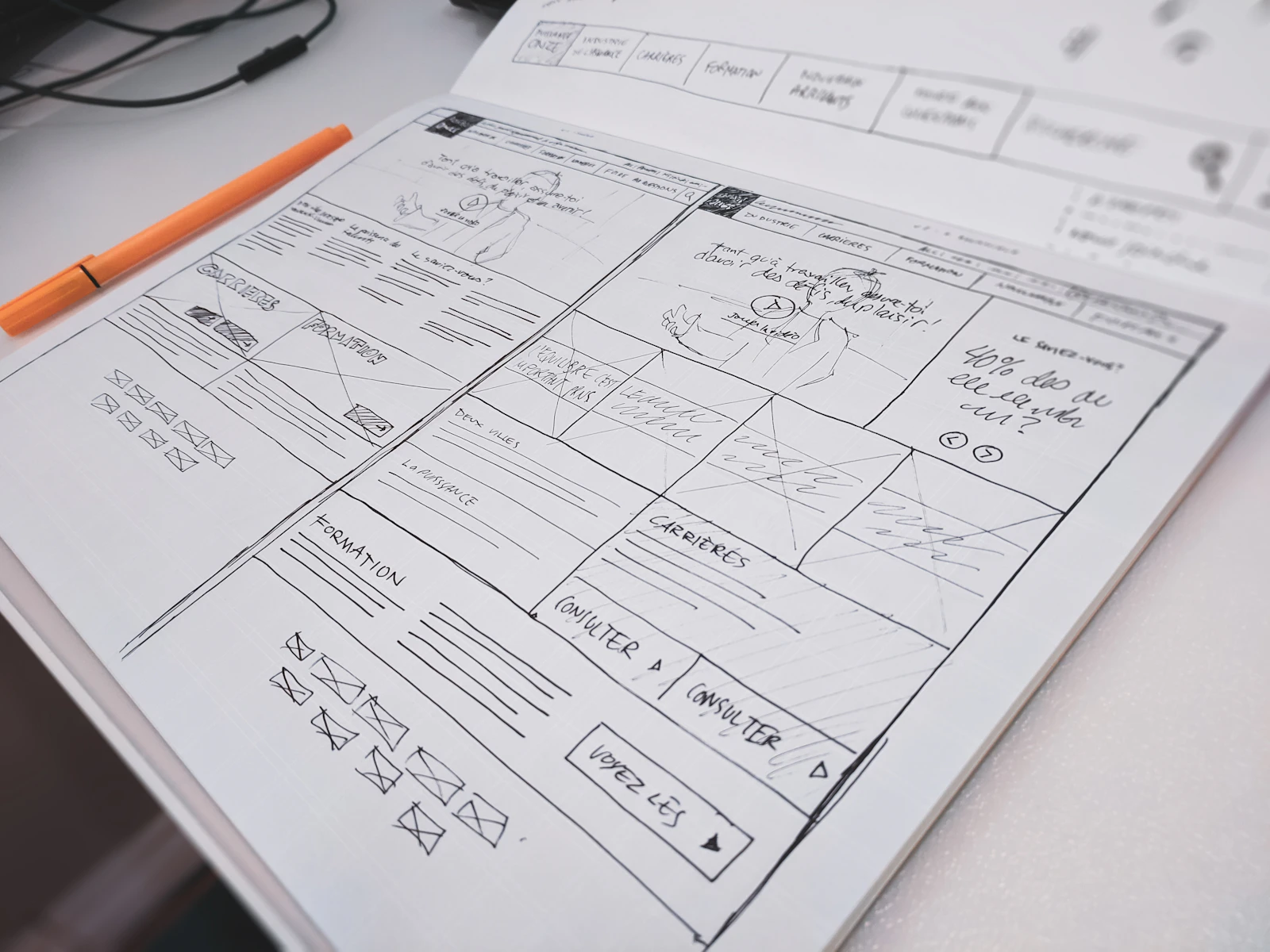
Landing page optimization means improving a page so that more visitors enquire, book an appointment or buy. You get more enquiries from the same ad budget without buying more clicks. The biggest levers almost always sit in the same seven places: offer, goal, ad, form, trust, load time and tests.
What is a landing page?
A landing page is a page where visitors arrive from an ad, a newsletter or a search. It has exactly one goal. That sets it apart from a home page, which offers many paths. When you need a dedicated landing page is explained in our guide Landing page or website.
The conversion rate is the share of visitors who reach the goal.
What this means for your company: When the conversion rate rises, your cost per enquiry falls, with the same budget.
Before you change anything: know what counts
First check whether you can see these three things:
- How many visitors come to the page, and from where?
- How many of them submit the form?
- Which of these enquiries can your sales team actually use?
What this means for your company: The third number is the most important. A page with many unsuitable enquiries costs your sales team time. So define beforehand what a qualified enquiry is.
The checklist: optimizing a landing page in seven steps
1. The offer is clear immediately
The upper part of the page, which you see without scrolling, decides whether someone stays. Three things have to be there: what you offer, for whom and what the next step is.
- The headline says what the visitor gets, not what your company is called.
- A subline names the target group or the result.
- The button is visible and says what happens, such as “Book an intro call”.
A simple test: show the page for five seconds to someone who does not know you. Can the person then say what you offer?
What this means for your company: Anyone who does not understand in the first seconds what you offer is gone. You still paid for the click.
2. One goal per page
Every additional link is an exit. A landing page leads to exactly one action.
- There is only one action the page leads to.
- The main navigation is reduced or hidden.
- Other offers have their own pages.
What this means for your company: Visitors do not get lost on your website, they end up in the form.
3. The page delivers what the ad promises
Anyone who clicks an ad expects exactly what it said. If the page differs, visitors bounce. With Google Ads you also often pay more per click if the page does not match the ad.
- The headline picks up the words of the ad.
- The offer, price or promotion from the ad is on the page.
- Different target groups get their own pages or variants.
What this means for your company: Ad and page belong in one hand. Otherwise you pay for clicks that are lost on the page.
4. The form asks only what you need
Every field is a hurdle. Ask only what sales really needs for the first contact.
- Every required field is necessary. Everything else is optional or dropped.
- Every field has a clear label.
- Error messages say what to do.
- The form is easy to fill in on a phone.
- The privacy notice sits below the button and is linked.
For longer enquiries, a step-by-step form helps. The first question is easy, the contact details come last.
What this means for your company: Fewer fields mean more enquiries. Your sales team clarifies the details in conversation anyway.
5. Trust where doubts arise
Visitors ask themselves: Can this provider do it? What happens after the enquiry? The answers belong on the page.
- References or client logos sit close to the button, as far as you are allowed to show them.
- The process after the enquiry is described in a few steps.
- A contact person has a name and a photo.
- Frequent objections are answered in a short FAQ.
What this means for your company: Anyone who knows what happens after the click is more likely to submit the form.
6. The page loads fast, on mobile too
A slow page loses visitors before they see the offer. How load time and enquiries are connected is shown in our guide Load time and enquiries.
- The page is tested on a phone, for example with Google's PageSpeed Insights.
- Images and videos do not slow down the build-up.
What this means for your company: Every visitor who leaves before the page loads is a paid click with no chance of an enquiry.
7. Changes are tested
Not every good idea brings more enquiries. Check changes one at a time so you know what worked.
- With many visitors: test two versions against each other at the same time (A/B test).
- With fewer visitors: compare equally long periods before and after.
- Every change is noted with a date.
- The quality of enquiries is discussed with sales.
What this means for your company: You keep only what demonstrably brings enquiries, and you know why.
Where to start
Start where most visitors are lost. If many bounce immediately, it is usually the offer, the ad or the load time. If they stay long and still do not enquire, it is more likely trust or the form.
What this means for your company: You do not have to change everything at once. One point with a big effect is enough to begin with.
Typical mistakes
- The home page serves as the destination for all ads.
- The headline is a slogan instead of an offer.
- Several buttons with different goals compete.
- The form asks for budget, phone and company size before anyone has trust.
- Only enquiries are counted, not their quality.
Frequently asked questions
That depends heavily on industry, offer and where visitors come from. Compare your page mainly with itself, before and after each change.
As long as the decision requires. A simple offer needs little text. An expensive B2B service needs more proof, process and answers to objections.
Not for every ad, but for every offer and every clearly separate target group. The message of the ad should be found again on the page.
As few as possible. Ask only what your sales team needs for the first contact.
If you regularly put budget into ads, usually yes. Even a few additional enquiries per month can cover the cost. Check this against your own cost per enquiry.
Where Aqtelo helps
As an agency for conversion optimization, we get more qualified enquiries out of your existing visitors. Ad and landing page come from one team, so the copywriter of the ad knows the page it lands on. We set the goal together beforehand, and every month the report shows what each enquiry cost. Ad accounts, pages and data belong to you.
Read with AI
Keep reading
5 min read
Landing Page or Website: What Your Campaign Really Needs
One page for one goal, or a whole website? When campaigns on Google, Meta or LinkedIn need their own landing page, and how to connect both cleanly.
5 min read
ChatGPT ads: when a test is worth it and how to prepare it
Ads in ChatGPT are a new channel with its own rules. Who sees them, when a test fits B2B and how to prepare your landing page and tracking.
5 min read
Generative Engine Optimization (GEO) Explained
GEO makes sure AI assistants name your company in their answers. What the term means, how it differs from SEO and AEO, and a checklist to tick off.